

International Mobile-Data Roaming: 2003-2012
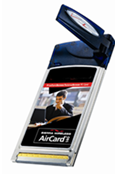
The roughly 2003-2012 window covered the emergence of practical mobile data for laptops — a transitional category that sat between the prior dial-up and WiFi era and the subsequent smartphone-dominated era. Cellular operators rolled out GPRS (from 2001-2002 in most major markets), EDGE (2003-2005), HSDPA / 3G (2005-2008), and HSPA+ (2008-2011) as the data-rate progression for connectivity delivered through PC Card / Express Card form-factor cellular modems plugged into laptops. The category as a separately-purchasable product effectively closed with the universal integration of mobile data into smartphones and the corresponding availability of laptop tethering.
Tempest Telecommunications operated an international mobile-data roaming product through this period as part of the unified Tempest roaming account: one customer login worked across partner cellular networks worldwide, with data sessions billed to the customer's monthly Tempest invoice.
Before universal smartphone mobile data, a laptop user wanting cellular Internet access carried a separate cellular modem — typically a PC Card or Express Card slot device with an external antenna, sold by the carrier as the "data-card" product. The Sierra Wireless AirCard series, Option Globetrotter, Novatel Wireless Merlin, and the Huawei E-series modems were the dominant hardware platforms. A subscriber to a home-market cellular operator could buy a data card bundled with a domestic mobile-data plan; if the home operator had international roaming agreements, the same card worked abroad at international-roaming pricing (typically $5-$15 per megabyte at era-typical roaming-shock rates).
International mobile-data roaming had its own customer-friction issues. Roaming rates were notoriously high, opaque, and prone to bill-shock incidents where a single international trip generated thousands of dollars in unexpected data charges. The EU intervened in this directly through the Roaming Regulation series from 2007 onward, capping intra-EU data-roaming rates progressively until the 2017 abolition of EU data-roaming surcharges altogether. Other jurisdictions did not introduce comparable consumer-protection caps and roaming rates remained unconstrained.
International mobile-data roaming was primarily a corporate-traveler product through the operational era — multinational employers whose laptop-carrying personnel needed predictable data-roaming costs without the bill-shock risk of unmetered international cellular roaming. Individual self-funded travelers used data cards for sustained-duration trips where a laptop-data-as-primary-connectivity workflow justified the dedicated-card cost. The category was less central to the satellite-heavy verticals (media, aid, resource sector, construction) whose remote-site work was already past cellular coverage in most operational geographies.
Tempest's mobile-data roaming product addressed the bill-shock problem by providing predictable per-country rates through pre-negotiated wholesale relationships with destination-country mobile operators. The customer's Tempest credentials authenticated on partner cellular networks across the supported countries; data sessions billed to the unified Tempest account at the agreed per-megabyte rate for that destination country, with monthly invoicing in the customer's home currency.
Coverage included the major Western European mobile-data markets (Orange France and the post-Wanadoo operations, T-Mobile Germany, Vodafone UK and the Vodafone partner network across Spain and Italy, the major Nordic markets, and the rest of the EU-15 mobile operators), the major Asian markets (NTT Docomo and KDDI in Japan, the major China operators on a more constrained basis, SK Telecom and KT in South Korea), and the major-economy markets across the Americas, Australia, and the Middle East.
Standard data-card hardware sold or rented through the Tempest channel was sourced from Sierra Wireless and Option, the dominant PC-Card-and-Express-Card-form-factor modem manufacturers of the period.
The international mobile-data roaming product category, like the broader unified-roaming category it was part of, contracted across 2008-2012 for reasons that affected every operator in the space:
- Smartphone tethering (2008 onward): The iPhone's personal-hotspot feature (added in iOS 3 in 2009) and the parallel Android equivalent rapidly displaced the dedicated-data-card use case. A smartphone with a domestic data plan tethered to a laptop provided functionally-equivalent connectivity through whichever international roaming arrangement the home mobile carrier had in place.
- EU data-roaming regulation: The progressive EU caps on intra-EU data-roaming rates (Roaming I through Roaming III regulations culminating in the 2017 surcharge abolition) substantially reduced the consumer-roaming-shock problem that Tempest's flat-rate product had been attractively differentiated against. By 2017 intra-EU data roaming was at home rates by regulation.
- Local SIM purchase culture: Cheap local SIM purchases became the standard for sustained-duration trips; multi-country travelers carried a stack of local SIMs and rotated them. The dedicated-roaming product category shrank as travelers managed their own per-destination connectivity directly.
The PC-Card-and-Express-Card modem form factor itself disappeared by approximately 2014-2015 as laptops dropped the slots and replaced them with USB ports (for the USB-modem successors) and built-in cellular modems (in select premium-business laptops). The dedicated-cellular-laptop-modem category effectively ceased to exist as a meaningful consumer product by the mid-2010s.
Tempest's mobile-data roaming wound down with the rest of the unified-roaming category through the same transition.