

Satellite Broadband Terminals: 2002-2012
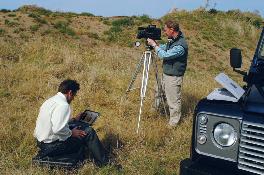
Portable satellite-broadband terminals — meaning a battery-powered, backpack-sized unit that gave an unmodified laptop genuine Internet connectivity from anywhere on Earth with line-of-sight to the appropriate satellite — emerged as a commercial category in roughly 2002 with Inmarsat's RBGAN (Regional Broadband Global Area Network) service. The category was substantially redefined in 2005 with the launch of BGAN (Broadband Global Area Network) on Inmarsat's next-generation I-4 satellite constellation. Thuraya DSL provided a regional-coverage competitor for the African / European / Asian footprint.
Tempest Telecommunications was an Inmarsat Distribution Partner reselling BGAN terminal hardware and airtime from the 2005 launch onward, plus the predecessor RBGAN units from 2002 and Thuraya DSL terminals from their introduction. Tempest's satellite-terminal customer base spanned all seven continents — the proof point for the Tempest unified-roaming-account claim of every-continent coverage. This page documents the broader market history of portable satellite broadband and Tempest's specific operations within it.
Before 2002, satellite Internet connectivity for non-government users meant VSAT (Very Small Aperture Terminal) deployments: a permanently-installed dish (typically 1-3 meters in diameter), a separate indoor modem, line-of-sight to a geostationary satellite, and a fixed installation typically requiring professional setup. VSAT worked for oil platforms, remote enterprise sites, broadcast trucks, and the rare yacht with enough deck space, but it was not portable in any meaningful consumer sense. A field operative or expedition team could not reasonably carry a VSAT installation as personal equipment.
The bandwidth available through VSAT was, paradoxically, higher than what succeeded it through the early portable-terminal era — geostationary dishes could deliver multi-megabit throughput when the equipment investment justified it. But the portability tradeoff was severe.
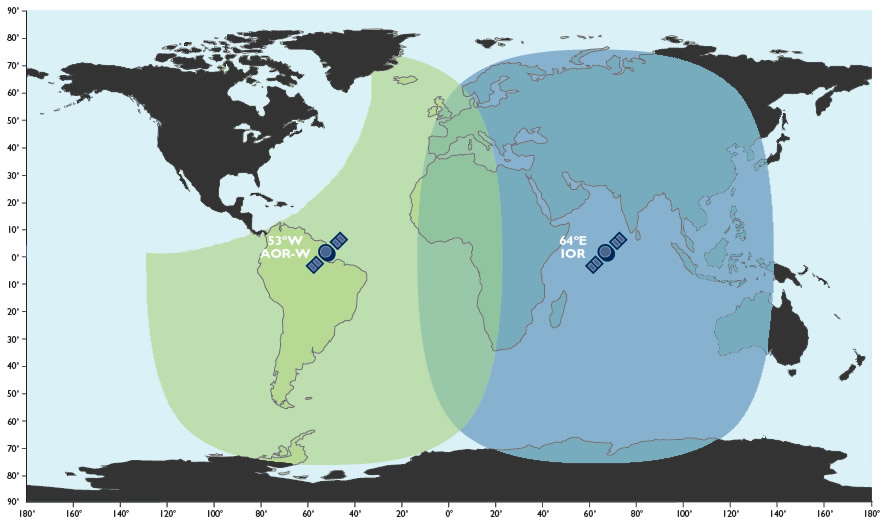
Inmarsat's RBGAN service launched in 2002 as the first commercial portable-broadband satellite product. The terminal — the Hughes 7200-series and Thrane & Thrane equivalents — was approximately the size of a thick hardcover book, weighed about a kilogram, included an integrated antenna with software-assisted pointing, and delivered up to 144 kbps symmetric throughput. It worked across Inmarsat's coverage footprint excluding North and Central America (the regional limitation that defined the "R" in RBGAN).
RBGAN's practical implications were substantial. A journalist could file copy from a Sahelian field site. An NGO operator could send situation reports from a humanitarian crisis zone. An expedition team could check in from a base camp. A broadcast crew could send compressed video clips at speeds that hadn't been previously possible without a vehicle-mounted setup. RBGAN ran until 2008-2009 when Inmarsat sunsetted the service in favor of its successor BGAN.
Tempest sold RBGAN terminals and airtime through the full 2002-2008 commercial life of the service. Tempest's standard RBGAN pricing during this period was approximately $35/month base plus $7.92-$10.00 per megabyte of data, with prepaid and postpaid options.
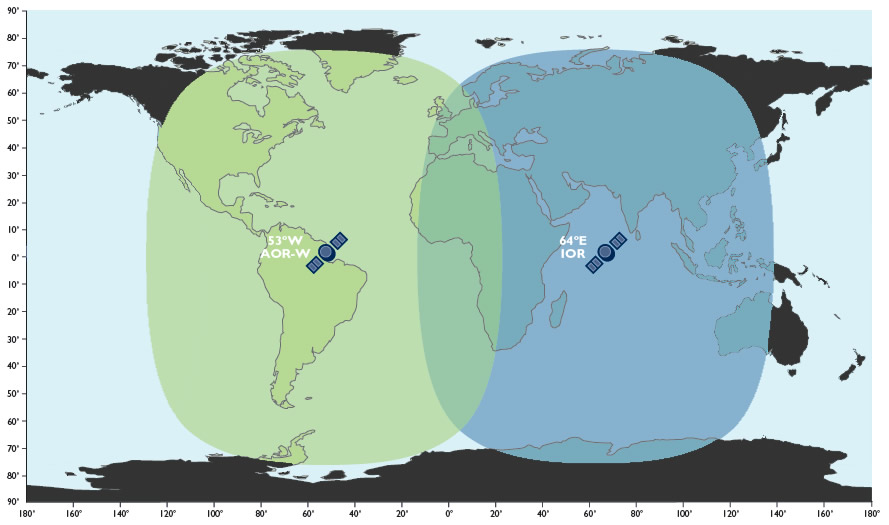
BGAN launched in 2005 on the new Inmarsat I-4 satellite constellation. The product redefined the portable-broadband category: a global coverage footprint (including North and Central America that RBGAN had lacked), throughput up to 492 kbps, symmetric data, the option for dedicated streaming circuits at guaranteed bitrates from 56-256 kbps, integrated satellite telephony, and SMS-messaging capability all from a terminal weighing 1-3 kg depending on the model. The Hughes 9201, 9202, and 9211, the Thrane & Thrane Explorer 300 / 500 / 700, and the Addvalue Wideye units became the standard hardware lineup.
BGAN's customer mix expanded dramatically from the RBGAN-era niche. The 2005-2010 peak deployment years sustained substantial customer bases across:
- Broadcast news and journalism: Major networks (CNN, BBC, Al Jazeera, Reuters, AP) standardized on BGAN for international correspondent field-kit deployment. Coverage of the Iraq War, the broader War on Terror, the 2011 Arab Spring, the Syrian Civil War, and dozens of natural-disaster humanitarian crises ran on BGAN terminals.
- Oil and gas operations: Offshore platforms, remote land operations, and supply-vessel maritime industry across the major hydrocarbon basins.
- NGO and humanitarian: Médecins Sans Frontières, the Red Cross / Red Crescent network, UN OCHA, and dozens of bilateral development agencies standardized on BGAN for crisis-zone deployment.
- Expedition and adventure: Polar expeditions, mountaineering operations on Everest and the major peaks, ocean-crossing sailing, and broader adventure-travel customers.
- Government and defense: Military signals supplementary, embassy communications backup, and government-emergency-management deployments.
Tempest was an Inmarsat Distribution Partner for BGAN from launch. Customer deployments through the Tempest channel spanned every continent including Antarctica.
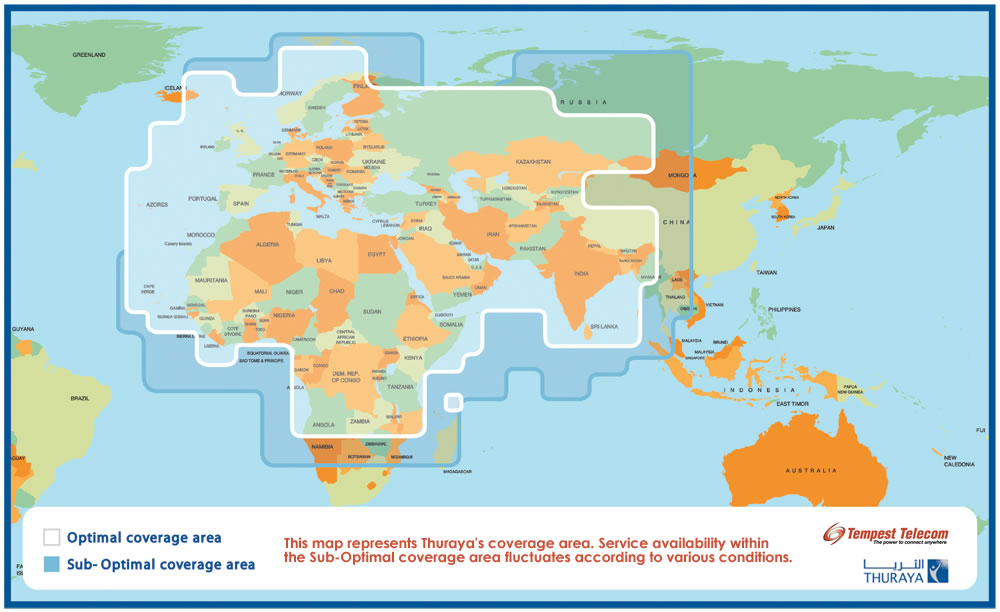
Thuraya, the regional satellite-phone-and-data carrier headquartered in UAE, launched its Thuraya DSL portable-data product through the 2000s as a regional competitor in the same portable-terminal category. Coverage spanned Africa, Europe, the Middle East, Central and South Asia — effectively the Inmarsat regional footprint plus an emphasis on the Middle Eastern and South Asian markets where Thuraya had stronger relationships. Throughput was approximately 144 kbps symmetric.
Thuraya DSL was attractive for customers operating exclusively in the regional footprint where it competed on equipment cost and on Thuraya's unlimited-usage plan option (approximately $2,500/month for unlimited regional bandwidth, which BGAN's per-megabyte pricing could not match for heavy-usage subscribers). Tempest resold Thuraya DSL alongside its BGAN and RBGAN inventory.
BGAN and RBGAN customer deployments through the operational era spanned the satellite-heavy verticals documented in the Solutions section: broadcast and media organizations (foreign correspondents, news-gathering crews, documentary production) were one of the most concentrated customer bases; UN agencies and humanitarian NGOs (ICRC, MSF, OCHA, UNHCR, WFP) standardized BGAN as the crisis-zone connectivity tool; oil-and-gas and mining customers used BGAN as the operations-data link at remote extraction sites; construction and engineering EPC contractors deployed portable terminals that moved with the construction front. Some individual expedition travelers rented BGAN units for sustained-duration trips needing broadband access. Corporate customers added BGAN to their unified roaming account when personnel deployment included remote-area work outside terrestrial coverage.
The seven-continent coverage claim was made literal by Tempest's satellite- terminal deployments at Antarctic research and logistics operations through the 2005-2012 BGAN era. The Antarctic customer base included support for the three primary US Antarctic Program stations (McMurdo, Amundsen-Scott South Pole, and Palmer Station on the Antarctic Peninsula), plus selected non-US national-program stations operated by partner nations under the Antarctic Treaty System framework.
Antarctic deployment had specific operational characteristics. Inmarsat BGAN required line-of-sight to the equatorial geostationary belt, which made it most reliable on the Antarctic coastal margin (where the satellite elevation angle was marginal but workable) and progressively less reliable approaching the geographic Pole (where elevation angles dropped below practical thresholds). The Amundsen-Scott South Pole Station relied instead on legacy LEO and elliptical-orbit satellites (NASA TDRSS, GOES-3 until decommissioning, and others), with Iridium 9505A handsets providing voice service for personnel; the Iridium constellation's pole-crossing geometry made it the only consumer voice service that worked at the Pole.
Tempest's Antarctic deployments closed the continental-coverage circle: terrestrial dial-up and WiFi roaming covered the other six continents, satellite-phone (primarily Iridium) reached every position on the Antarctic landmass including the Pole, and satellite-terminal data (primarily BGAN) reached the coastal Antarctic stations. With these three layers active, a Tempest customer in the operational era could legitimately be told that their single account functioned on every continent.
The portable-satellite-broadband category continues to exist but has been reshaped substantially since 2012. Inmarsat's subsequent generations (the I-5 / Global Xpress Ka-band service from 2015, the I-6 hybrid L-band/Ka-band from 2021) delivered higher throughput at the cost of larger and more-expensive terminals. Iridium's Certus service launched in 2018-2019 with higher-throughput successors to the legacy Iridium handset platform. SpaceX's Starlink, with consumer-portable terminals from 2021-2022 and the Starlink Roam product from 2023, substantially undercut all the legacy operators on per-megabit pricing while keeping comparable portability.
The 2002-2012 RBGAN-and-BGAN era that Tempest operated through is recognizable today as the foundation period for portable satellite broadband — the era when the category first existed as a meaningful consumer-purchasable product, before the constellation-driven price collapse of the 2020s made satellite broadband substantially more accessible.