

Regional BGAN migration to Inmarsat-4
Early this year, Inmarsat launched one of the most
sophisticated commercial communications satellites in history. This is part of a
planned network of 3 satellites which when in place will provide coverage to 95%
of the land surface of the planet.
On July 9th Regional BGAN users will benefit
from vastly extended coverage once the transition to the first I-4 satellite is
made. Coverage will extend from its current range to southern Africa, SE Asia,
China, Central Russia and Western Australia.
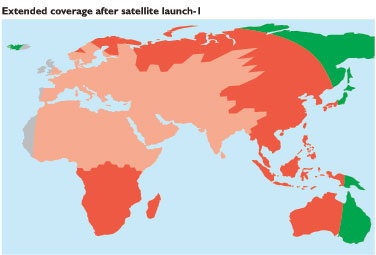
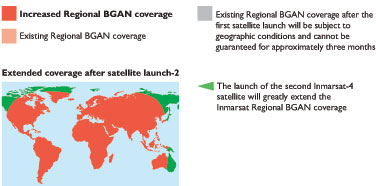
All existing R-BGAN terminals are already designed to
work with the new Inmarsat-4 (I-4) satellites. In order to continue using the
service and to take advantage of the extended coverage, users need only to
perform a simple software upgrade to their R-BGAN terminals.
Please follow the following simple steps for the
upgrade:
1. Ensure you obtain a copy of the I-4 Upgrade Package
as soon as it becomes available. You can get this 3 ways:
� Online from the website (http://www.tempestcom.com/services/upgrade.aspx
) (available now)
� Via the Upgrade option located on the R-BGAN Launch
Pad (only available after July 9)
� CD (distributed upon request only if you can not
obtain upgrade via the network)
2. On or shortly after July 9, carry out the upgrade to
your R-BGAN terminal.
Important: Do not complete the upgrade before the
specified date otherwise you will lose service.
If your installation of the software is successful, you
will notice that the launch pad software looks different and displays a Bgan
logo instead of the Regional-Bgan logo.
3. Rotate the antenna switch from L to R to change
polarization. This switch is located on the underside of the "dish" when the
unit is open.
If using an external antenna, rotate the antenna switch
to EXT and change antenna polarity as indicated in the external antenna manual.
4. Switch the terminal ON and follow the normal antenna pointing procedure, noting that at this time the maximum signal strength will require the antenna to be in a slightly different direction as it is now pointing towards the new I-4 satellite.